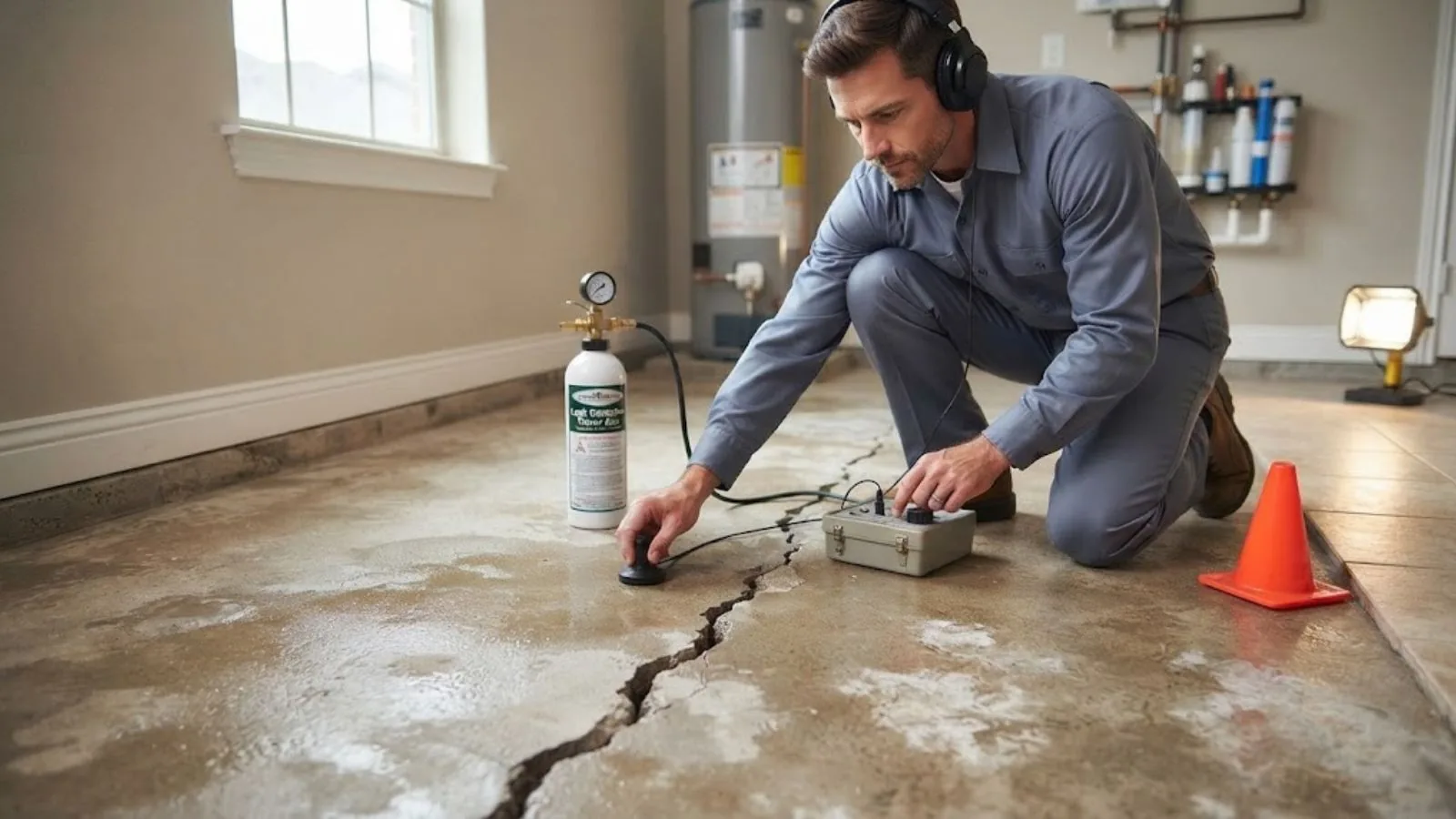
If a slab leak is the first failure in a relatively young plumbing system, a spot repair or a reroute is usually the right answer. If the system is old, made of a material known for failing or has leaked more than once, a repipe may save money and disruption over time. The decision depends on pipe material, age, access and how many failures you have had.
This guide gives a framework you can use with any plumber, including us. The goal is to help you ask the right questions, not to push a bigger job.
The decision framework
| Situation | Likely choice | Why |
|---|---|---|
| First leak, newer system, one location. | Spot repair. | The rest of the system is sound. |
| First leak, hard-to-reach slab. | Reroute the line. | Avoids cutting concrete and may fix the line for good. |
| Second or third leak in a few years. | Repipe or reroute several lines. | A pattern means the pipe is failing. |
| Old galvanized or early polybutylene. | Repipe | The material is known to fail. |
| Pinholes in copper in several places. | Repipe or lining, depending on condition. | The pipe walls are thinning. |
No table replaces a diagnosis. A detection visit and a look at the pipe tell us which row you are in. Our leak detection page covers how we find the leak first.
What each option involves
Slab leak repair
- Cut a small opening or reroute one line.
- Shorter job, lower cost.
- Leaves the rest of the system as it is.
- May need repeating if other lines fail.
Repipe
- New supply lines throughout the house.
- Longer job and higher cost.
- Ends a cycle of leaks in the old lines.
- Some wall openings and patching.
See slab leak repair and repiping for the full process on each.
Leak under the floor now?
Call the 24/7 line. Shut off the main first.
Why the age of your house matters
Pipe materials change by era. Older homes may have galvanized steel or early copper, and homes built roughly from the late 1970s to the mid 1990s may have polybutylene in places. Newer homes use PEX or newer copper. Knowing your house's era helps predict what is under the floor.
The age of a house, though, is only a clue. Past repairs, remodels and additions mix materials. We identify what is in the pipe when we open it, and we explain what it means.
Local note: homes, water and permits
Cathedral City was first subdivided as Cathedral City, California in 1925 and was incorporated in 1981, according to the city, so the housing here covers many building eras. Our own guidance is only that you check the age of your plumbing and not assume.
Hard water is the local factor in pipe failure. The Coachella Valley Water District 2024 summary reports Cove communities averaging about 120 mg/L hardness, with a range up to 310, and the Desert Water Agency 2021 report shows groundwater near 230 mg/L. Scale corrodes metal pipe from the inside over decades.
Cathedral City Building and Safety requires permits for plumbing alterations, issued to the owner or a state-licensed contractor with a city business license. A repipe is a significant alteration, so call 760-770-0340 to confirm the steps. Inspections run Monday through Thursday.
Questions to ask any plumber
- What pipe material is under my floor, and how do you know?
- Is this leak a one-off, or does the pipe look worn throughout?
- What are my options, and what does each cost and disrupt?
- What is the permit plan?
- What does the warranty cover?
If you are in Palm Springs, mid-century homes there have their own plumbing profile, and our Palm Springs plumbing page covers that. If you have a burst pipe now, see burst pipe repair.
How disruptive is each option
A spot repair through the slab opens a small area of the floor. You lose that spot for a few days, and the flooring may need patching. A reroute runs new lines through attic space or walls, so the floor stays intact, but some wall openings are needed.
A repipe replaces most or all of the supply lines. Expect water to be off for part of a day or more, several openings in walls and patching afterward. The upside is that the old lines are retired, and the new system is set up for decades.
Ask each plumber how long water will be off, how many openings are needed and who handles patching and paint.
Planning around the work
- Arrange for water for drinking and cooking while it is off.
- Move furniture and décor away from work areas.
- Ask whether the floor covering over the leak can be removed and reinstalled.
- Confirm what the permit and inspection steps are.
- Photograph the work areas before and after for your records.
If an insurance claim is involved, share the leak detection report and the plumber's findings with your agent early. Policies differ on what they cover, so ask before work begins.
Resale and records
A repipe or a well-documented slab repair can matter when you sell. Buyers and inspectors ask about leaks and pipe materials. Keep the permit record, the invoice, the leak detection report and the warranty in one folder.
If a repair was done without a permit when one was required, it can become a problem at sale. Confirm the permit path with the city before work starts.
What to do while you decide
- Shut off the main valve if you hear water running under the floor.
- Do not stand on warm or damp floor areas near outlets.
- Keep the leak detection report and photos together.
- Do not let the decision drag on if the meter is moving.
A leak that runs for weeks can undermine soil and flooring, so decide on a plan while the system is shut off or monitored.
Quick questions
Not always. A single leak in a younger system is usually a repair. A pattern of leaks or an old material points toward repiping.
Often yes. A new line through the walls or attic can bypass the leak without cutting the slab.
A plumber can identify the material at exposed pipe, such as at the water heater or the main. Color and markings are clues.
The city lists permits for plumbing alterations. Call Building and Safety at 760-770-0340.
Not on its own. The city was first subdivided in 1925 and incorporated in 1981, but your house depends on when it was built and what has been replaced.