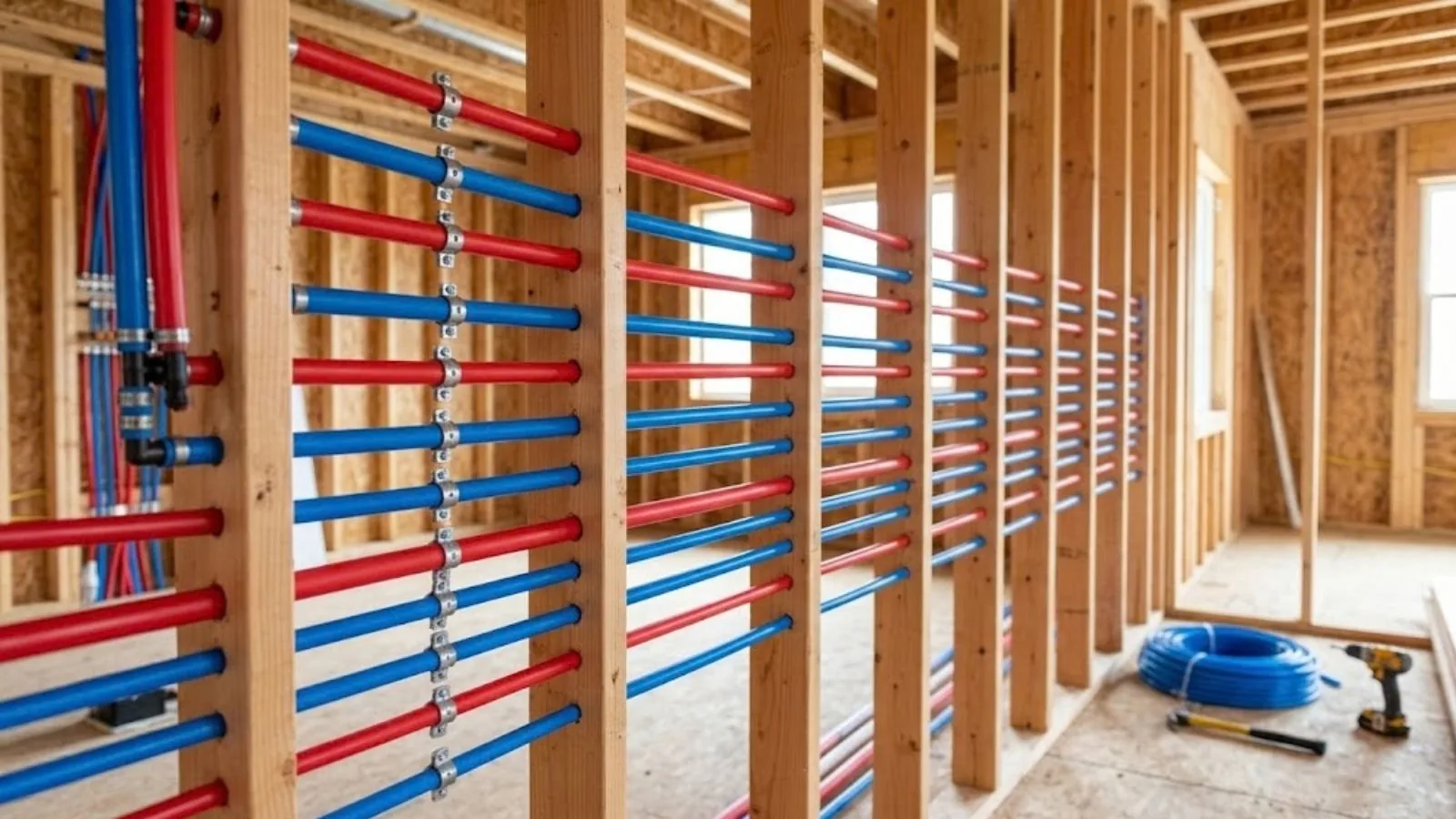
Repiping replaces the water supply lines in your home, usually after repeated leaks, low pressure or rusty water. It is a larger project than a repair, but it can end a cycle of patching. The decision depends on pipe material, age and how often the system has failed.
This page explains when repiping is worth considering, what materials are involved and what to expect on the job.
Signs your pipes may be at the end of their life
Repeated leaks
Two or three leaks in a few years often point to a system-wide problem and not bad luck.
Low water pressure
Scale and corrosion narrow pipe inside, especially in older galvanized lines.
Discolored water
Brown or rusty water suggests corrosion in iron or galvanized lines.
Pinhole leaks in copper
Small leaks in copper often come from aggressive water and thinning walls.
Pipe materials and what they mean
| Material | Typical concern | Note |
|---|---|---|
| Galvanized steel. | Rust and mineral buildup narrow the pipe. | Common in older homes. |
| Copper | Pitting and pinholes in aggressive water. | Long-lived but not immune. |
| Polybutylene | Known for failures at fittings. | Used roughly from the late 1970s to the mid 1990s. |
| PEX | Flexible plastic, used widely in new work. | Needs proper fittings and protection from sun. |
If your home was built or remodeled in the late 1970s through the mid 1990s, check whether it has polybutylene. We can identify the material and explain what it means for your house.
Tired of patching leaks?
Call and describe the history. We will tell you if repiping makes sense.
How a repipe works
Plan the route
We map where new lines will run, favoring attics and walls that keep drywall work small.
Shut off and install
Water is shut off, new lines are run and connected to fixtures, and the old lines are abandoned or removed.
Test and inspect
The new system is pressure tested, and the city inspects if a permit applies.
Patch and restore
Small wall openings are patched. Painting and finish work are separate trades.
A whole-house repipe usually takes a few days. We tell you how long your house will take, and plan for when water is off so you can arrange for the household.
Why Cathedral City homes get repiped
The city was first subdivided in 1925 and incorporated in 1981, so homes here span many decades and many pipe materials. A house built before the 1980s may still have its original galvanized or early copper. Coachella Valley Water District data shows Cove averages near 120 mg/L hardness and Desert Water Agency groundwater near 230 mg/L, which accelerates scale in iron lines and can pit copper over decades.
Slab homes complicate it. When pipes run through a concrete slab, a rerouted line through the attic can avoid cutting concrete. Our slab leak repair page explains that option. If a leak has just burst, see burst pipe repair first.
Cathedral City Building and Safety requires permits for plumbing alterations. Call 760-770-0340 to confirm what a repipe needs, and permits go to the owner or a state-licensed contractor with a city business license. The work follows the California Plumbing Code, which is based on the Uniform Plumbing Code (UPC).
What to do before the crew arrives
- Clear access to the water heater, the main shutoff and any attic or closet hatches.
- Plan for the household to be without water for part of each work day.
- Fill containers for drinking and cooking before the water goes off.
- Move furniture and wall hangings away from the walls that will be opened.
- Do not run fixtures once the crew has shut off the water, since pressure can return unexpectedly.
Tell the crew about any pets, medical equipment that uses water and anyone working from home, so the schedule fits your household.
What repiping costs
Repiping is a larger investment, and the price depends on the size of the home, the number of fixtures and the access. We quote after we see the layout.
What moves the price
Repiping is often a homeowner expense and not covered. If a failure caused damage, ask your agent about the damage and keep documentation.
For your real number, call (760) 986-1999 and describe the problem.
Questions about repiping in Cathedral City
If leaks keep coming back, water is discolored or pressure is poor throughout the house, the whole system may be failing. A single leak is usually a repair.
A typical home takes a few days. We give you a window when we quote.
Some openings are needed, but we plan routes to keep them small. Patching is included, and paint is separate.
The city requires permits for plumbing alterations. Call Building and Safety at 760-770-0340 to confirm.
Repiping is planned. If a pipe has burst, call the 24/7 line for help.