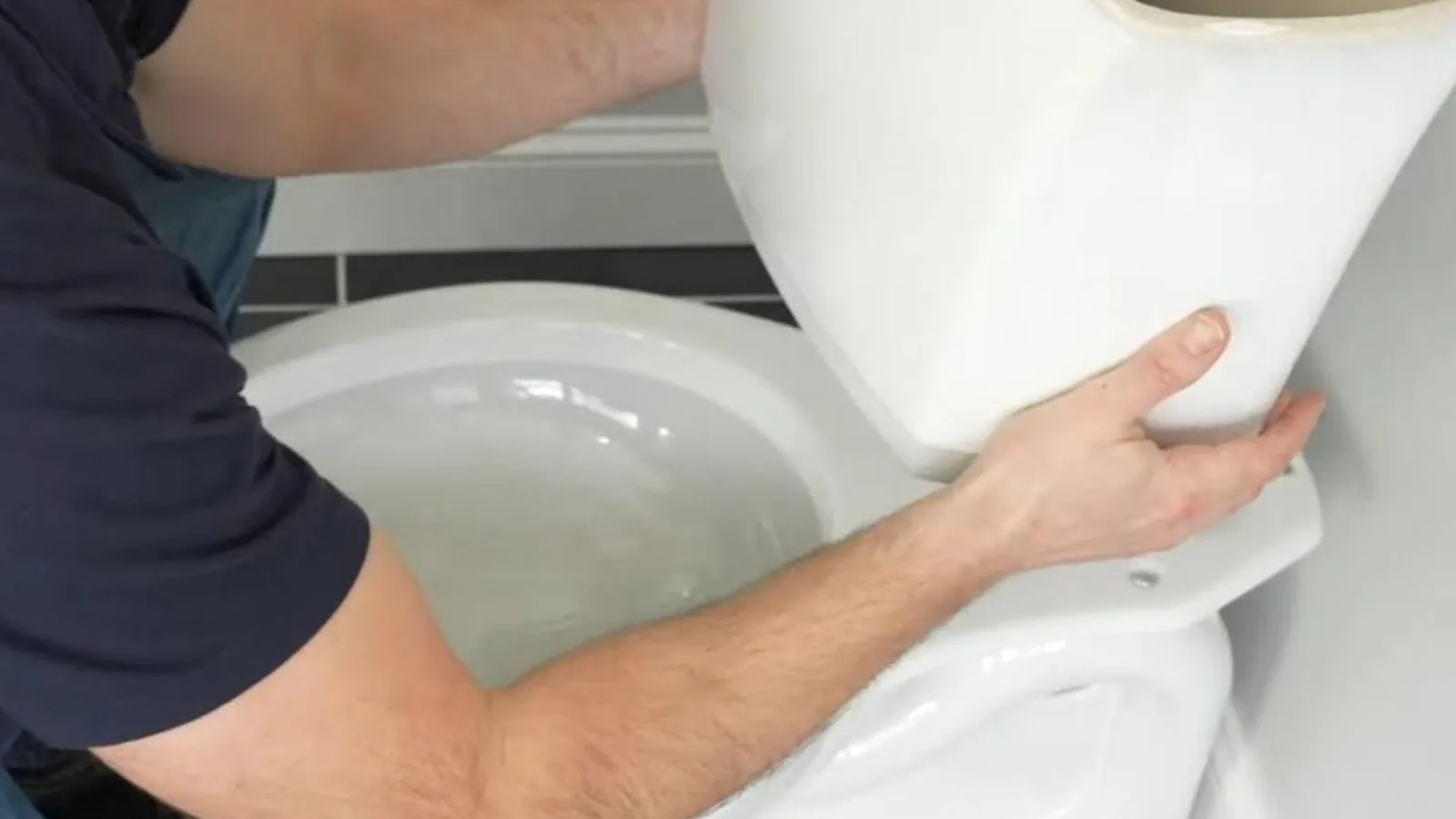
Replacing a toilet takes a few hours and a few basic tools, and it is one of the more manageable plumbing projects at home. The steps are simple, but the work depends on what is under the old toilet. If the flange is cracked or the floor is soft, the job changes, and that is the moment to call a plumber.
Below is a clear sequence, a tool list and a short list of problems that mean you should stop. We also cover the permit question for Cathedral City and what hard water does to new fittings.
What you need before you start
| Item | Why you need it |
|---|---|
| New toilet with bowl, tank and hardware. | Check the rough-in distance matches your wall. |
| New wax ring or wax-free seal. | Never reuse the old one. |
| New closet bolts. | Old ones corrode and break. |
| New supply line. | Replace the old one while the toilet is off. |
| Adjustable wrench, putty knife, level. | For bolts, scraping and setting the bowl. |
| Sponge, bucket and towels. | For the remaining water in the bowl and trap. |
Measure the rough-in before you shop. It is the distance from the wall to the center of the floor drain flange, and the new toilet must match it. Most are twelve inches, but check yours.
The steps in order
Shut off and drain
Close the shutoff valve, flush and sponge out the remaining water in the tank and bowl.
Disconnect and lift
Disconnect the supply line, remove the bolt caps and nuts and lift the toilet straight up. Two people make it safer.
Clean and inspect the flange
Scrape off the old wax and check that the flange is solid, level with the floor and not cracked.
Set the new toilet
Place the new wax ring, lower the bowl onto the bolts and press down evenly. Do not rock it.
Connect and test
Tighten the nuts, attach the tank if separate, connect the supply, turn on the water and check for leaks.
Found water damage?
Call and describe what you see. We cover nights and weekends.
Stop and call a plumber if you find any of these
A cracked or broken flange
The toilet cannot seal properly. A repair ring or flange replacement is needed.
A soft or stained floor
Water has leaked under the old toilet and the subfloor is damaged.
A shutoff valve that will not close
Shut the main valve, then have the valve replaced before you continue.
Corroded or odd-sized drain
The old drain may need a different fitting or a repair.
If the toilet rocks after setting, do not keep tightening. Shim the base or reset it. Overtightening cracks the porcelain. Our toilet repair page covers fixes for leaks and rocking that appear after an install.
Local note: permits and hard water
Cathedral City Building and Safety states that permits are required for plumbing, electrical, sewage and mechanical installations or alterations, and does not list toilet swaps by name. Call 760-770-0340 to ask whether a like-for-like swap needs a permit at your address. The city issues permits to the owner or a state-licensed contractor with a city business license.
Hard water affects the new toilet quickly. The Coachella Valley Water District 2024 Domestic Water Quality Summary reports its Cove communities averaging about 120 mg/L, and Desert Water Agency's 2021 report shows groundwater near 230 mg/L. Scale gums up the fill valve and the rim jets, so use new supply lines and expect to clean the jets once or twice a year.
After the install
Check the base for moisture after a day and again after a week. A slow weep at the base means the wax seal did not seat. If the new toilet clogs or flushes weakly, the problem may be in the drain and not the toilet. See our drain cleaning page for what a deeper clog needs.
If you want a plumber to handle the install, call us and ask for the price before work starts. If you live in Palm Springs, our Palm Springs plumbing page lists what is different there.
Choosing a toilet that fits your bathroom
Three measurements decide whether a toilet fits. The rough-in is the distance from the finished wall to the center of the floor drain flange. The bowl length and the tank depth decide whether the toilet clears a door, a vanity or a tub. Measure each one before you shop.
Beyond fit, pick a bowl shape and height that suit the household. A taller bowl is easier for many adults, and an elongated bowl is longer than a round one. If you are replacing a toilet that flushes weakly, look at the flush design on the box, and read reviews that discuss clogging.
Buy the toilet and the parts in one trip, including the wax ring, bolts and supply line. A missing part on a Saturday afternoon means a second trip with the water off.
Common mistakes first-timers make
- Reusing the old wax ring or bolts.
- Overtightening the bolts and cracking the base.
- Setting the toilet, lifting it to adjust and breaking the wax seal.
- Forgetting to check the flange height against the new floor.
- Skipping the leak check after a full flush and a refill.
Set the toilet down once and press it straight. Tighten the nuts a little at a time, alternating sides. A toilet that wobbles slightly after tightening needs a shim, not more force.
Quick questions
A first-time install usually takes a few hours, including a trip for parts. A plumber is faster, and an unexpected flange problem adds time for anyone.
No. A wax ring only seals once. Always use a new one, or a wax-free seal.
The floor may be uneven or the flange too low. Shim the base or reset the toilet with a flange spacer. Do not overtighten the bolts.
The city lists permits for plumbing installations or alterations and does not name toilet swaps. Call Building and Safety at 760-770-0340 before you start.
Stop and have it checked. A soft floor can mean a slow leak has been running, and the subfloor may need repair before a new toilet goes in.